News - 29.04.2022
The All-Seeing Sky
The world premiere of The All-Seeing Sky Double Percussion Concerto will be performed by the Christchurch Symphony Orchestra in their first concert of 2022, on 14 May and featuring Swiss percussionists Fabian Ziegler and Luca Staffelbach who will be making their Aotearoa New Zealand debut.

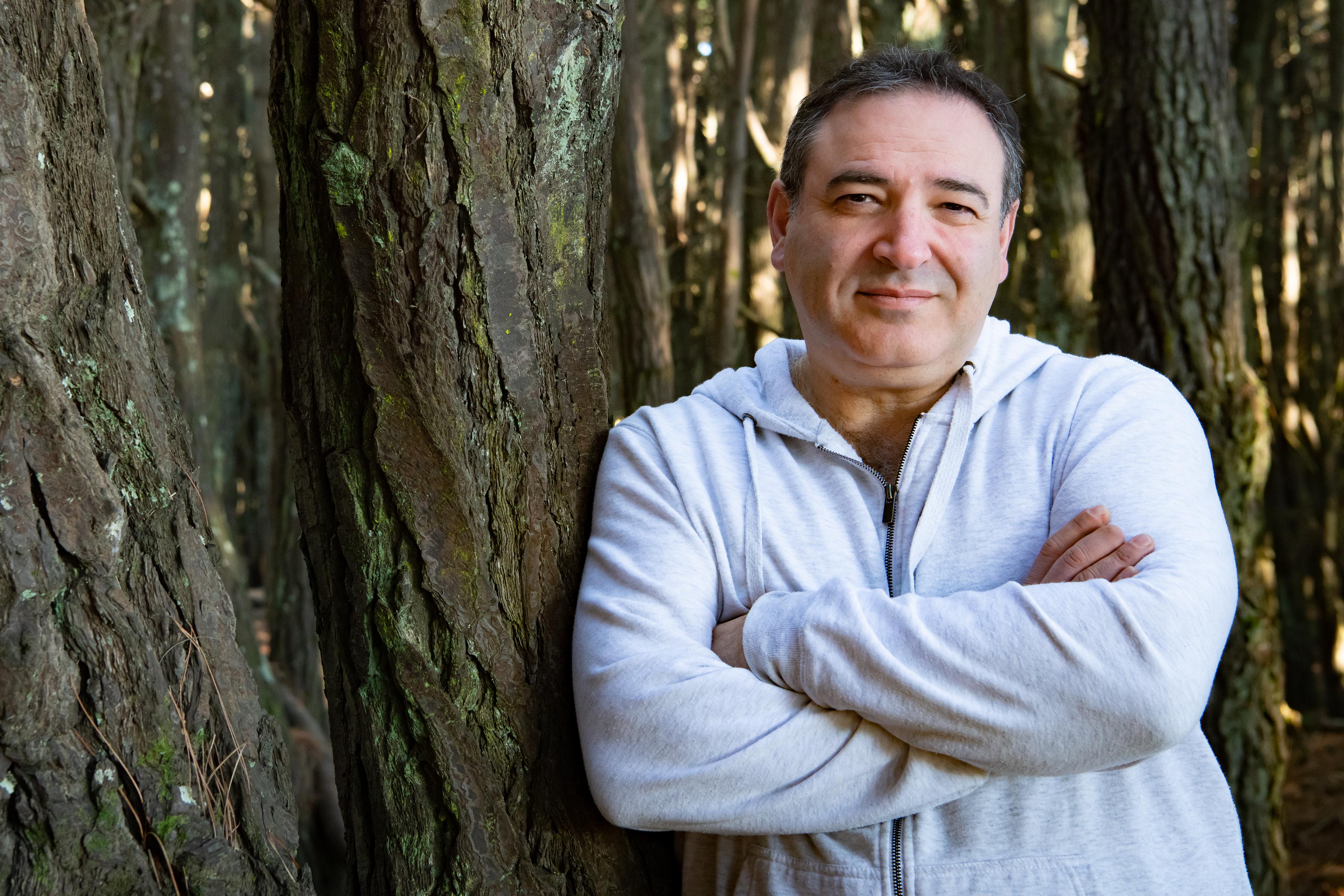
John Psathas describes himself as a “pretty doom and gloom kind of person”.
This, and a re-read of Dante Alighieri’s epic poem The Divine Comedy with Gustave Doré’s engravings contributed to the tone of Psathas’ brand-new concerto for double percussion, The All-Seeing Sky.
The world premiere of The All-Seeing Sky Double Percussion Concerto will be performed by the Christchurch Symphony Orchestra in their first concert of 2022, on 14 May and features Swiss percussionists Fabian Ziegler and Luca Staffelbach, who will be making their Aotearoa New Zealand debut.
The idea for the concerto didn’t actually begin in Dante’s dark forest where the poet proceeds to descend through the nine circles of Hell where he meets various damned souls. Rather, this is the culmination of a series of successful collaborations between Psathas and Swiss percussionist Fabian Ziegler, who was keen to have a concerto written for him and fellow percussionist Luca Staffelbach.
“One of the things that we talked about was how, generally, when orchestral presenters talk with percussionists about doing a percussion concerto, they run screaming because [percussion concertos] use so much gear, so many instruments,” Psathas explains “Often, because the percussion itself is so powerful as a solo instrument, the orchestra also has to be quite large.”
He and Ziegler came up with the idea of a “user-and-presenter-friendly percussion concerto” that “pulled everything back”, with an orchestra slightly smaller than those of Mozart’s era and “limited solo percussion”.
Psathas finds his process of writing music intuitive, and he usually doesn’t start with a theme. However, the first thirty-seconds of The All-Seeing Sky evoked a feeling of antiquity and ancient times for him and, combined with the imagery from The Divine Comedy, he started to develop an idea of actually being in the boat crossing the River Styx going to hell.
“That’s the mood of that first movement, there’s this very subdued ‘oh wow, this is actually happening’ feeling. And then there’s the climax of that movement which is thinking of it from the perspective of those that are waiting for you; that they would pull out the trumpets and give you a fantastic fanfare, saying, ‘Welcome’.”
The concerto then proceeds to explore the idea that there are far more similarities between the ‘Upper World’ of Earth and Hell than one would like to admit, with the third movement bringing together the idea of constant surveillance.
“[It] pulls together the idea of how we allow a supernatural entity – any one of a number of versions of the idea of god – or the way that devices allow the presence of others, whether they’re corporations, or software owners, or individuals we connect with, to actually colonise and populate our inner subjectivities.
“What’s interesting for me is that religions have weakened a lot in the last 300 years and the vacuum that’s been created by this has been filled in with other things, and one of them is this new, incredible – and I don’t necessary mean this in a positive way – technological connecting of people and invasion of privacy. It’s like we’re constantly being monitored and observed.”
However, it’s not all just doom and gloom...
“You have to listen to the end of the concerto because, no matter how deep or dark or how tragic the whole thing gets, for me, there always has to be an underlying positivity about it. There’s a Greek concept, ‘the gladdening sorrow’ – this idea that in our lives, we are always moving between these states of gratitude for being alive and sorrow for understanding all of the ill that’s in the world,” Psathas explains.
“The thing is, we need both of them; the glad and the sorrow. I would say that, definitely, this concerto and a lot of my work encapsulates that concept, but what wins is always the positive. That’s actually quite a naïve view of the world, to think that the good will always win, but I can’t let go of that. To let go of optimism and positivism is the worst alternative.”
The All-Seeing Sky: Concerto for Double Percussion and Orchestra, by John Psathas, will be performed in Lamb & Hayward Masterworks: Angel of Light, on Saturday 14 May, 7.30pm, at the Christchurch Town Hall. Featuring the Christchurch Symphony Orchestra, Fabian Ziegler and Luca Staffelbach (percussion), and conducted by CSO Chief Conductor Benjamin Northey. BOOK NOW