Biographies - 13.07.2023
Meet the Orchestra: Pablo Ruiz Henao

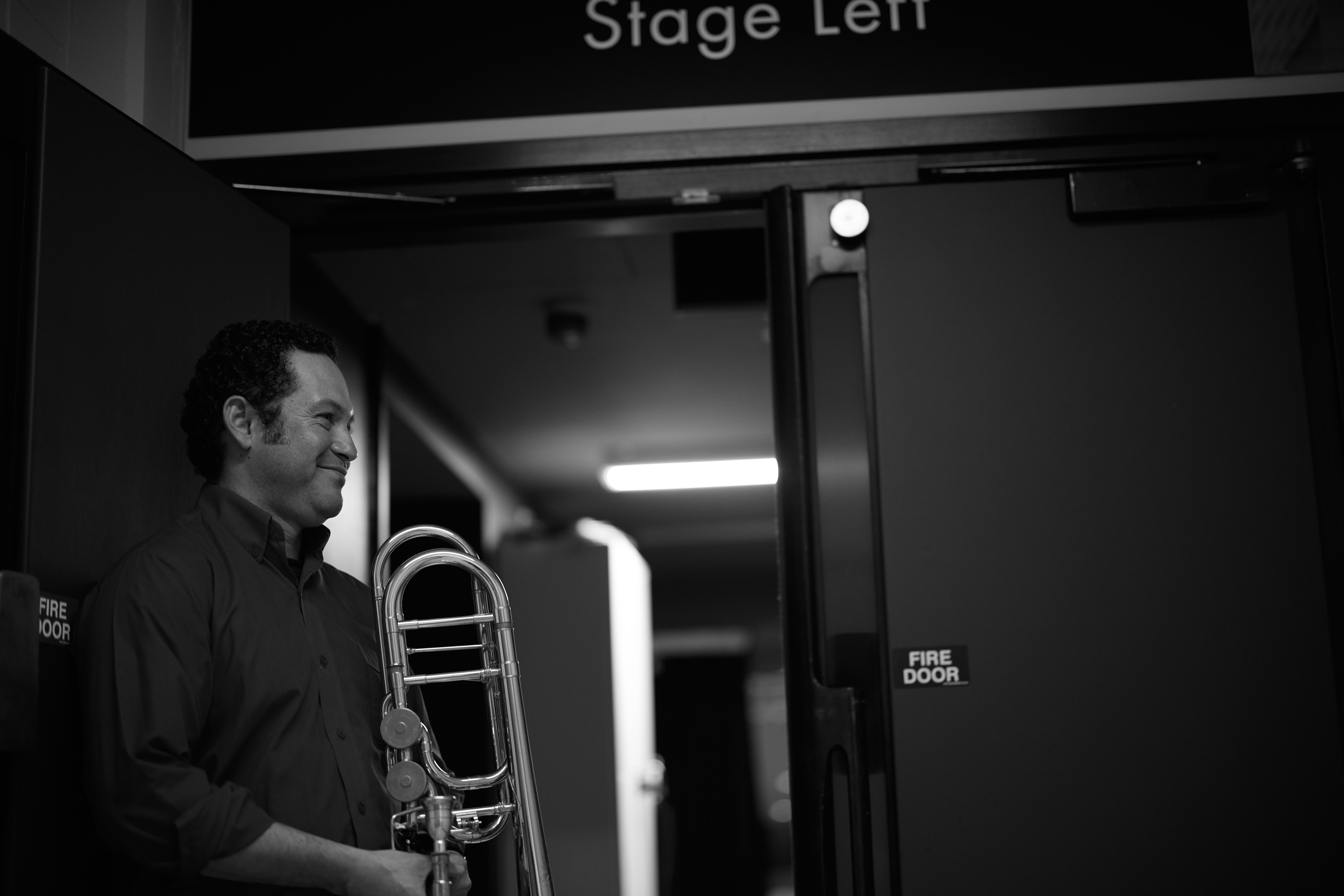
How did you get into playing the bass trombone?
By accident really. I was a very good tenor trombone student in Colombia, but I wasn’t really aware of the existence of the bass trombone. One day my apartment was robbed and my beloved ‘Conn 88H’ tenor trombone was stolen. After that, I only had enough money left to buy a rather big and scummy trombone from a pawn shop, and when I brought it to my next lesson my teacher told me it was actually a bass trombone, which steered me along the bass trombone path! Only four months after this, the National Symphony of Colombia held auditions for bass trombone, and (without knowing I was ready) I auditioned and won the position with that big, scummy, used bass trombone, becoming a professional bass trombone player!
Tell us about your first performance?
My first performance was playing the piano at the age of 8. I performed some delightful short etudes at my local music school, and it went well, but I was never really into playing the piano because I wanted to play a noisy instrument!
What is the magical moment of performing for you?
The magical moment of a performance, for me at least, is during a concert when I forget I’m at work and just listen, feel, and enjoy the combination of the music coming out of my instrument mixing and blending with my colleagues; principally when I achieve that beautiful combined golden ringing tone.
Your role with CSO is as Principal Bass Trombone. Can you tell us a little about what that role looks like?
When you are an Orchestral Bass trombonist, you have several roles:
Sometimes you are the third trombone (bass trombonists don’t love being called this) where you mostly play chords or short moments alongside the first and second trombone. You don’t have to produce a big round sound, but sound like a slightly bigger tenor trombone.
Other times, you are the lowest instrument in the brass section (works with no tuba), and have to produce a slightly heavier and thicker sound so that your colleagues can hear you properly and tune their notes accordingly. For this, I must listen very carefully to the Double Basses, Cellos and Bassoons, as you don’t want to be out of tune with them!
And some other times, you team up with the tuba! This is great fun as the tuba brings a lot of power, harmonic ground, and a great brassy sound. When you combine the tuba’s wall of sound with the slightly more direct sound of the bass trombone, you get that amazing strong and commanding sonic ground, where you can almost drive the whole orchestra from the back. But with all of that awesome power comes a lot of responsibility. You don’t want to create a lot of low rumble or antagonise the conductor, or your colleagues…!
What’s it like being a musician in New Zealand?
I have found that NZ packs a lot of punch music-wise, especially for its size. I find that almost all kinds of music are very well accepted and even encouraged. I’ve had the opportunity to play many different kinds of gigs, besides with CSO - big bands, pop gigs, world music gigs, shows, anything really! And that’s one more advantage of being in a smaller population - you get called to play that wide variety of shows, so it’s never a dull day!
What is your best memory playing as an orchestra musician?
One of my best memories as an orchestral musician was the first time my bass trombone Professor (Ben van Dijk, Netherlands) trusted me enough to cover his position at the Rotterdam Philharmonic Orchestra. That week we played ‘Pictures in Exhibition’ which is almost a bass trombone concerto. I must have played very well, because I was asked by the conductor (V. Gerguiev) at the end of the piece to stand up and take some applause. My professor was in the audience, without my knowledge, and after the concert he gave me a big, surprise congratulations, and we went out for a few beers with the other “big dogs’’ of Rotterdam Phil. It was truly great!
We heard you also dabble in conducting. How did you get into that?
I started conducting at University in Colombia because conducting lessons were a part of the curriculum for all the music program students (we had the option of conducting the students concert band or the Choir). I really enjoyed the lessons and we had a great teacher who focused the conducting lessons in a way where you were working with colleagues, rather than being a musical dictator or fearsome leader.
I conducted professionally for a few years here in О̄tautahi, where I was appointed as the MD for the ‘50’s Up Brass’, which is a brass band made of senior players - a mix of amateurs and former professional musicians. It was a fascinating combination of great players - some more enthusiastic than proficient!
I still receive invitations and requests to conduct some of the local community orchestras and bands. Also, a small part of my job description with CSO is to conduct the orchestra, which I really enjoy!
Favourite composer?
Many, but Prokofiev is quite high on my list.
Do you have any pre-concert or post-concert rituals?
Nothing in particular. I don’t like to play hungry, and I do like a short but strong warm up before the concert.
What might surprise people to know about you?
I might have a certain amount of “Youtube fame” as an adventure motorbike rider on my channel “Bad Idea Bros” (shameless plug - like and subscribe!) that I run with two of my friends, and we travel by motorbike on dicey roads and almost inaccessible places.
Any fun facts about the bass trombone?
In the 16th century, trombone players were amongst the richest musicians, as they were some of the few players employed by the church, and almost strictly played sacred music. That’s also why there is a period of time where you won’t see much trombone playing in non-sacred orchestral music.
What concert were you/are you looking forward to most this season?
Lamb & Hayward Masterworks: White Horses! It was a very active concert for the low brass. Beautiful music, masterfully composed.